What is an ETF? Complete Guide for Beginners in India
If you’ve recently started Investment through stock market, you’ve probably come across the term “ETF” and One question arrise in your mind about What is an ETF? We seen that in past few years and currently, Exchange Traded Funds have become one of the fastest-growing investment options in India because of their good benefits. From beginners to experienced investors building their diversified portfolios through ETFs.
But still not all of them know about what exactly is an ETF? Is it similar to a mutual fund? Why do investors choose ETFs over buying individual stocks? And most importantly, is an ETF the right investment for you? This guide will answers all of your questions as we provide What is an ETF in simple language. After you ready everything you’ll surely know how ETFs work, their advantages, potential risks, and how you can start investing with confidence.
What is an ETF? Learn fully
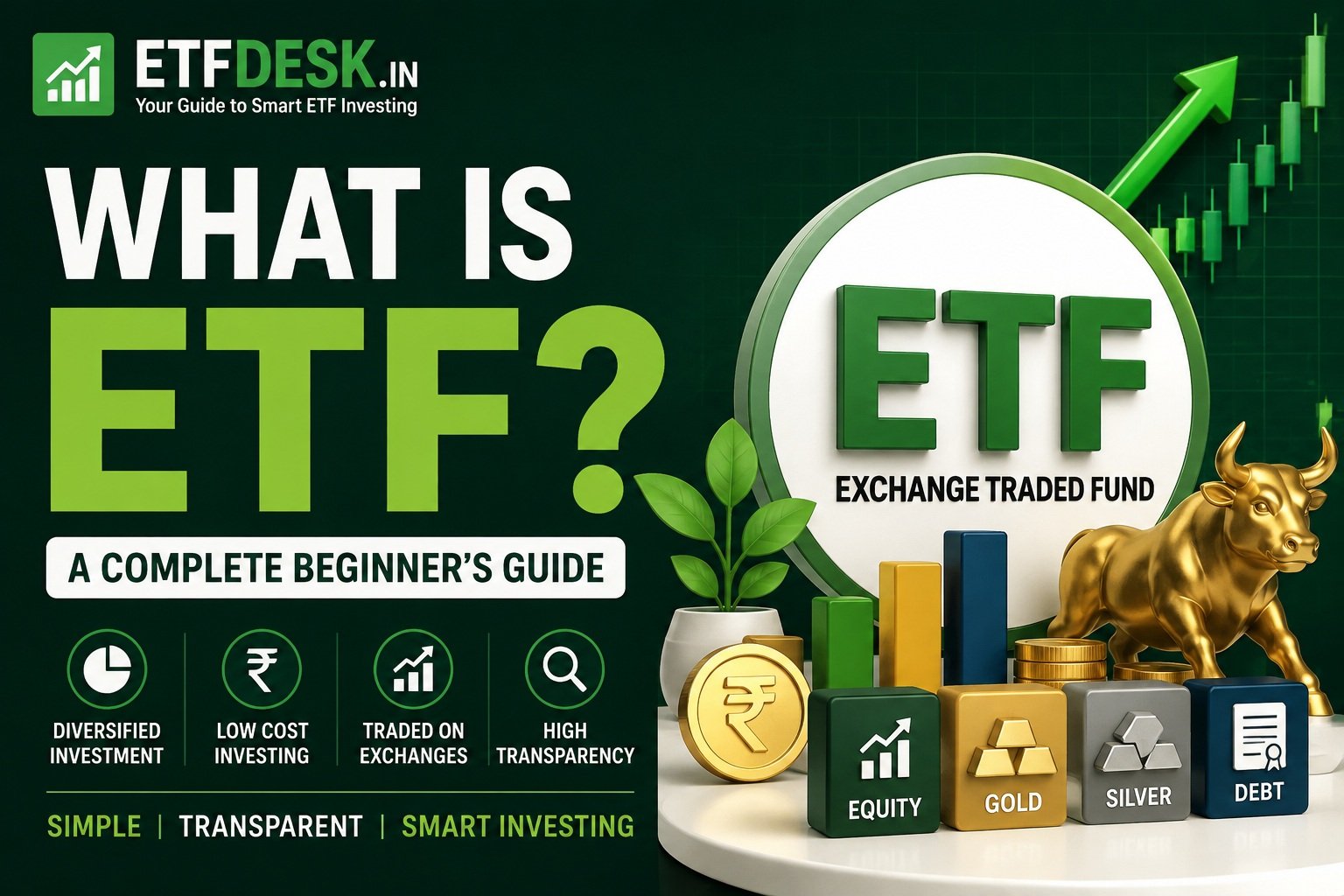
If we tell in simple languages then An ETF is a basket of investments that is traded on a stock exchange just like a regular company share. Instead of investing your money in a single stock, an ETF allows you to invest in multiple securities through a single purchase with low amount.
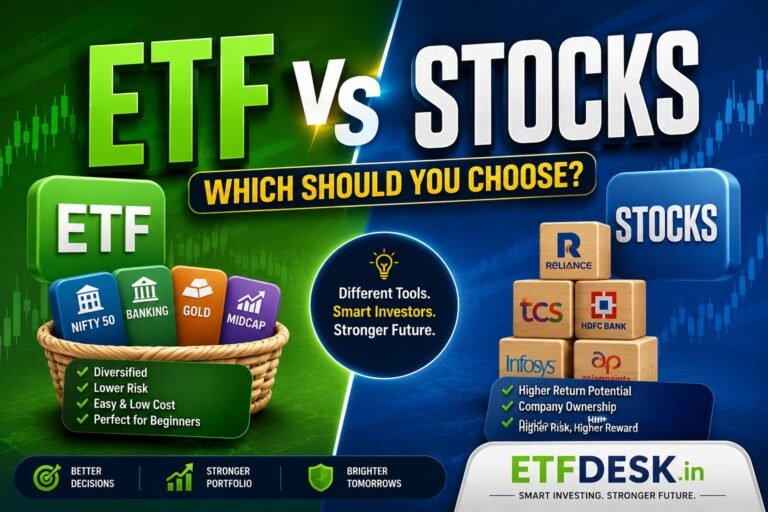
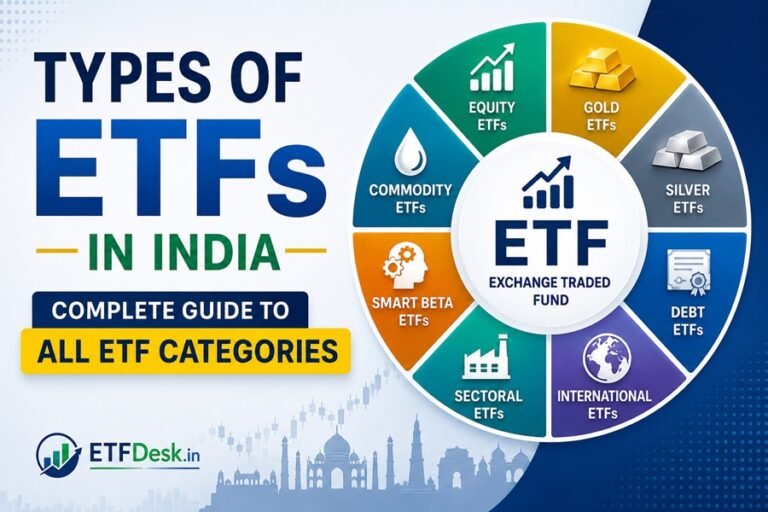
ETF Just like a ready-made investment portfolio. Depending on the type of ETF, it may contain stocks, government bonds, gold, silver, or even international companies. When you buy one unit of an ETF, you automatically own a small portion of every asset held by that fund.
For example, a Nifty 50 ETF invests in the same 50 companies that make up the Nifty 50 Index. If the index rises, the ETF generally moves higher as well. Likewise, if the index falls, the ETF also fell by a almost a similar percentage.
The Main Advantages of ETFs is, one of the easiest ways to gain broad market exposure without researching dozens of individual stocks.
📈 ETF Top Gainers
Explore the best-performing ETFs across different time periods.
📉 ETF Top Losers
Explore the worst-performing ETFs across different time periods.
Why Are ETFs Becoming So Popular in current days?
Day by Day Investor know their benefits of Investing in ETF so Popularity of investing in ETF has grown rapidly because they combine the best features of stocks and mutual funds.
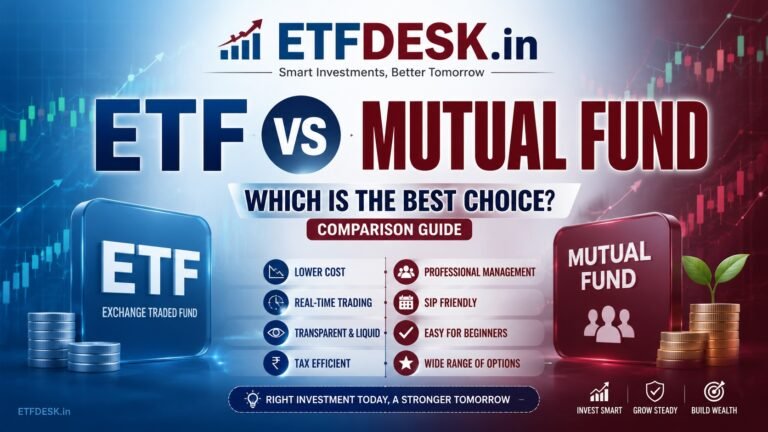
One of Main benefits of buying of ETF Units are bought and sold on the stock exchange throughout the trading day in comparison to mutual fund investor only get nav after the end of the day. ETF Investors can monitor live prices, place market or limit orders, and trade whenever the market is open.
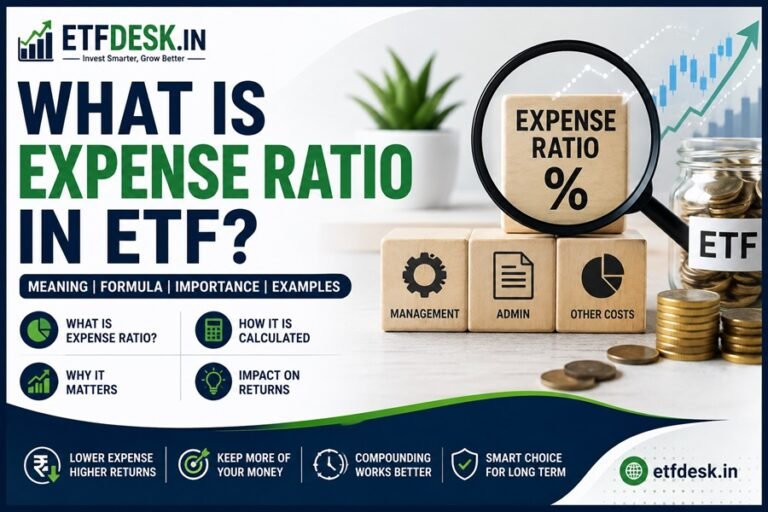
At the same time, ETFs help investor in wealth creation by diversification and that will reduce the risk of relying on a single company. They also generally have lower expense ratios because most ETFs simply track an index instead of being actively managed.
For investors who want simplicity, transparency, and lower costs, ETFs are often an excellent choice.
Explore More ETF Options
Looking for more investment choices? Explore different ETF categories and compare available options before investing.
How Does an ETF Work?
Let’s Understand What is an ETFs with a simple example.
Imagine If you want to invest in India’s top 50 companies then Buying each stock individually would require Huge capital and also a regular portfolio management.
Instead, an Asset Management Company (AMC) creates a Nifty 50 ETF that purchases all 50 companies according to the index’s weightage. The ETF is then listed on the stock exchange, where investors can buy or sell units just like shares.
Every trading day, the value of the ETF changes based on the performance of the companies it holds. If the underlying stocks increase in value, the ETF generally appreciates as well. If they decline, the ETF’s price usually falls.
As an investor, you don’t need to manage dozens of stocks yourself. The ETF automatically follow that benchmark it tracks.
Types of ETFs in India
India offers a wide range of ETFs across different asset classes and investment objectives. To explore them in detail, read our article on Types of ETFs in India.
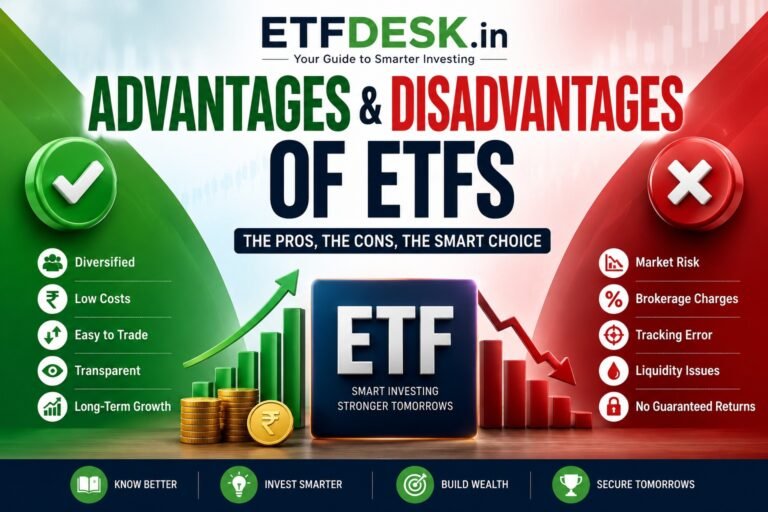
Benefits of Investing in ETFs
ETFs have become popular for many reasons:
- Instant Diversification
- Lower Investment Cost
- Easy to Trade
- High Transparency
- Suitable for Long-Term Wealth Creation
Want to estimate your ETF returns before investing? Use our free ETF Calculator to calculate potential profits, SIP returns, CAGR, brokerage, and more in just a few clicks.
Are There Any Risks?
Like every market-linked investment, ETFs also involve certain risks.
Their value can decline during market corrections, and some ETFs may not perfectly match the returns of their benchmark due to tracking error.
Sector ETFs are more volatile because they depend on the performance of a single industry, while less actively traded ETFs may experience lower liquidity.
Who Should Invest in ETFs?
ETFs are suitable for almost every type of investor. ETF Investment are ideal for beginners who want a simple investment option, long-term investors looking to build wealth, salaried individuals investing regularly through SIPs, and experienced investors seeking portfolio diversification.
Not sure which ETF to choose? Browse our comprehensive ETF Reviews to compare India’s top ETFs and find the one that matches your investment goals.
How to Start Investing in ETFs
Getting started is very easy.
Open a Demat and trading account with a registered stockbroker such as Dhan (which currently offers a ₹0 brokerage plan for Equity deliveries) or go with Angel One, Groww, Zerodha etc. Just Complete your KYC process, add funds to your trading account, search for your preferred ETF on the NSE or BSE, and place your buy order.
After purchasing, your ETF units will appear in your Demat account just like company shares.