
Types of ETFs in India: Complete Guide to All ETF Categories
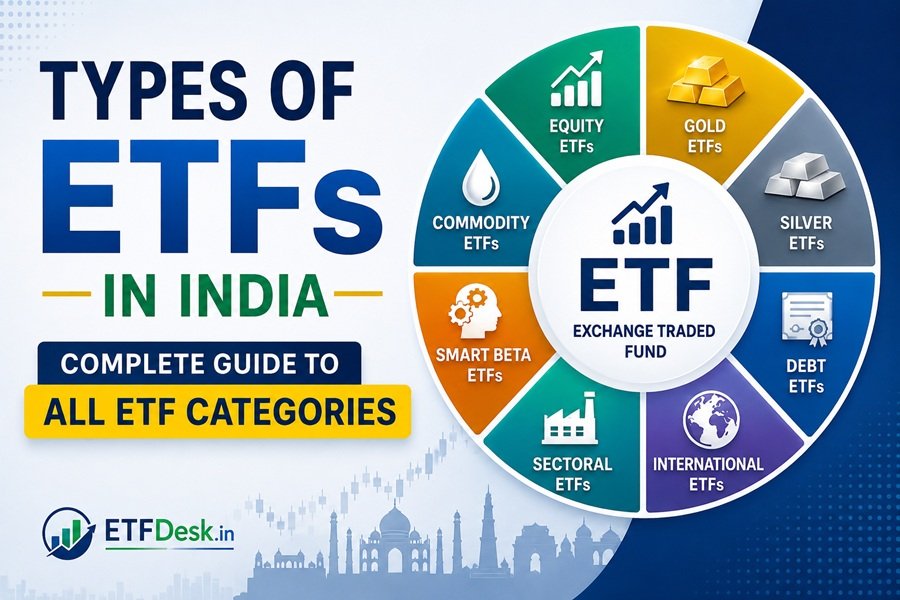
Currently in 2026 So many types of ETFs in India. ETF have become one of the most popular investment options in India for the Gen-z as ETF provide the diversification of in stock trading. ETFs are listed on stock exchanges and can be bought or sold throughout market hours this advantage make them a flexible investment choice for both beginners and experienced investors.
Currently in India So Many Fund house Provide the different ETF options in different Indexes. Whether you want long-term wealth creation, stable income, international exposure, or protection against inflation, there is an ETF available for your needs in Market. Understanding the various types of ETFs in India can help you build a diversified investment portfolio while keeping costs low.
What are ETFs?
ETF is a basket of securities that tracks a particular index, commodity, sector, or asset class. If you Unlike mutual funds, ETFs are traded on stock exchanges just like shares so you can trading just like normal shares.
Some ETFs invest in Indian stocks, while others invest in gold, government bonds, international markets, or specific sectors of the economy.
Types of ETFs in India
Equity ETFs
Equity ETFs invest in shares of listed companies and usually track a stock market index. These are the most popular ETFs among Indian investors.
Examples
- Nifty 50 ETF
- Nifty Next 50 ETF
- Nifty Midcap ETF
- Nifty Smallcap 250 ETF
- Sensex ETF
Benefits
- Suitable for long-term wealth creation
- Diversified portfolio
- Low expense ratio
- Easy to trade
Best For
- Beginners
- Long-term investors
- SIP investors
Don’t Miss : Top ETFs Review of This Category : NIFTYBEES, MID150BEES
Gold ETFs
Gold ETFs invest in physical gold and aim to track domestic gold prices. Investors get exposure to gold without purchasing and storing physical gold.
Benefits
- No storage worries
- High liquidity
- Portfolio diversification
- Hedge against inflation
Best For
- Conservative investors
- Portfolio diversification
- Long-term wealth preservation
Don’t Miss : Top ETFs Review of This Category : GOLDBEES
Silver ETFs
Silver ETFs invest in physical silver and closely follow silver prices in India.
Benefits
- Exposure to precious metals
- Inflation hedge
- Lower investment amount than physical silver
- Easy buying and selling
Best For
- Diversification
- Commodity investors
- Long-term investors
Don’t Miss : Top ETFs Review of This Category : SILVERBEES
Debt ETFs
Debt ETFs invest in government securities, treasury bills, PSU bonds, and corporate bonds.
These ETFs generally carry lower risk than equity ETFs.
Benefits
- Stable returns
- Lower volatility
- Better capital protection
- Regular income potential
Best For
- Conservative investors
- Retired investors
- Short- to medium-term goals
International ETFs
International ETFs invest in foreign stock markets such as the United States, Europe, Japan, or emerging markets.
Some Indian ETFs provide exposure to indices like:
- Nasdaq-100
- S&P 500
- Hang Seng
Benefits
- Global diversification
- Exposure to global technology companies
- Reduce dependence on Indian markets
Best For
- Long-term investors
- Investors seeking international exposure
Sectoral ETFs
Sector ETFs invest in companies belonging to a single sector.
Popular sectors include:
- Banking
- IT
- Healthcare
- Pharma
- Auto
- PSU
- Energy
- Infrastructure
Benefits
- Focused investment
- Potential for higher returns
- Easy sector allocation
Risks
- Higher volatility
- Sector concentration risk
Best For
- Experienced investors
- Tactical investment opportunities
Smart Beta ETFs
Smart Beta ETFs follow specially designed indices instead of traditional market-cap weighted indices.
These indices may focus on:
- Value investing
- Quality companies
- Low volatility
- Momentum
- Equal Weight
- Alpha strategies
Benefits
- Better risk-adjusted returns
- Rule-based investing
- Improved diversification
Best For
- Long-term investors
- Investors seeking enhanced index strategies
Commodity ETFs
Commodity ETFs invest in commodities rather than stocks.
In India, the most common commodity ETFs are:
- Gold ETFs
- Silver ETFs
- OIL ETFs
Future commodity ETFs may include other commodities if regulations evolve.
Benefits
- Inflation protection
- Diversification
- Alternative asset exposure
📊 Comparison of Different Types of ETFs
| ETF Type | Risk Level | Return Potential | Best For |
|---|---|---|---|
| Equity ETF | Medium to High | High | Long-term investing |
| Gold ETF | Medium | Moderate | Portfolio diversification |
| Silver ETF | High | Moderate to High | Commodity exposure |
| Debt ETF | Low | Low to Moderate | Stable returns |
| International ETF | Medium | High | Global diversification |
| Sector ETF | High | High | Experienced investors |
| Smart Beta ETF | Medium | High | Strategic investing |
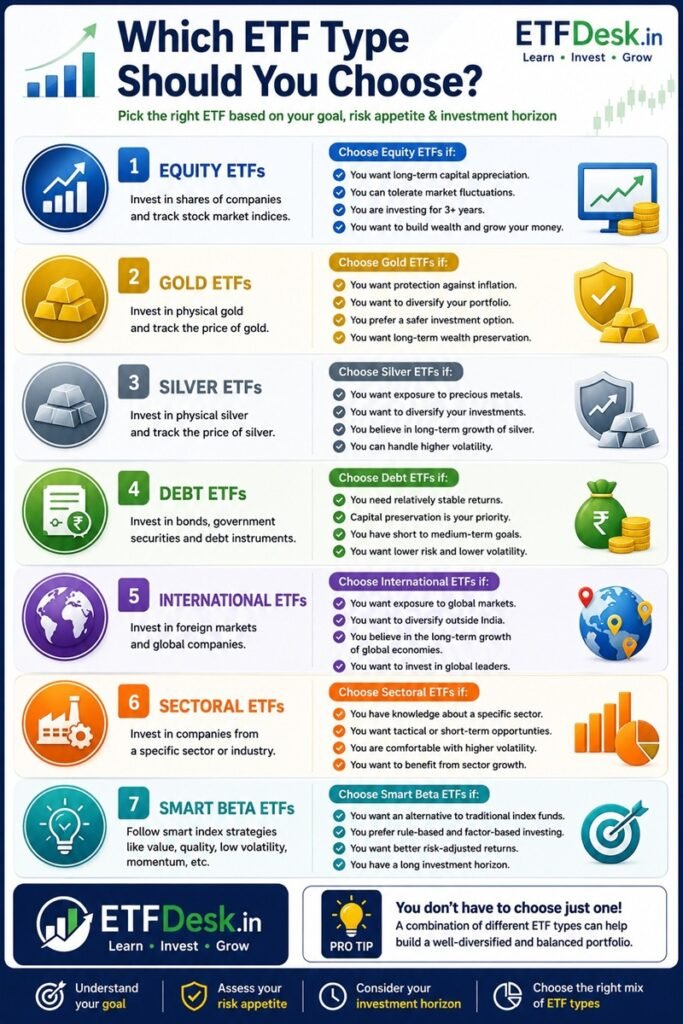
Things to Consider Before Investing
- Investment objective
- Risk tolerance
- Expense ratio
- Tracking error
- Liquidity
- Assets Under Management (AUM)
- Benchmark index
- Investment horizon
Frequently Ask Questions
Which type of ETF is best in India?
There is no single “best” ETF type. Equity ETFs are generally preferred for long-term wealth creation, while Gold ETFs are useful for diversification and Debt ETFs suit investors seeking lower risk.
Are Gold ETFs better than Equity ETFs?
Gold ETFs and Equity ETFs serve different purposes. Gold ETFs can help reduce portfolio volatility, whereas Equity ETFs have historically offered higher long-term growth potential.
Which ETF is safest?
Debt ETFs are generally considered among the lower-risk ETF categories because they invest in government securities and high-quality bonds.
Can I invest in multiple ETF types?
Yes. Making diversified portfolios by combining Equity, Gold, Debt, and International ETFs are always best for long term financial goals and risk tolerance.