
ETF Investing During a Market Crash (Complete Guide)
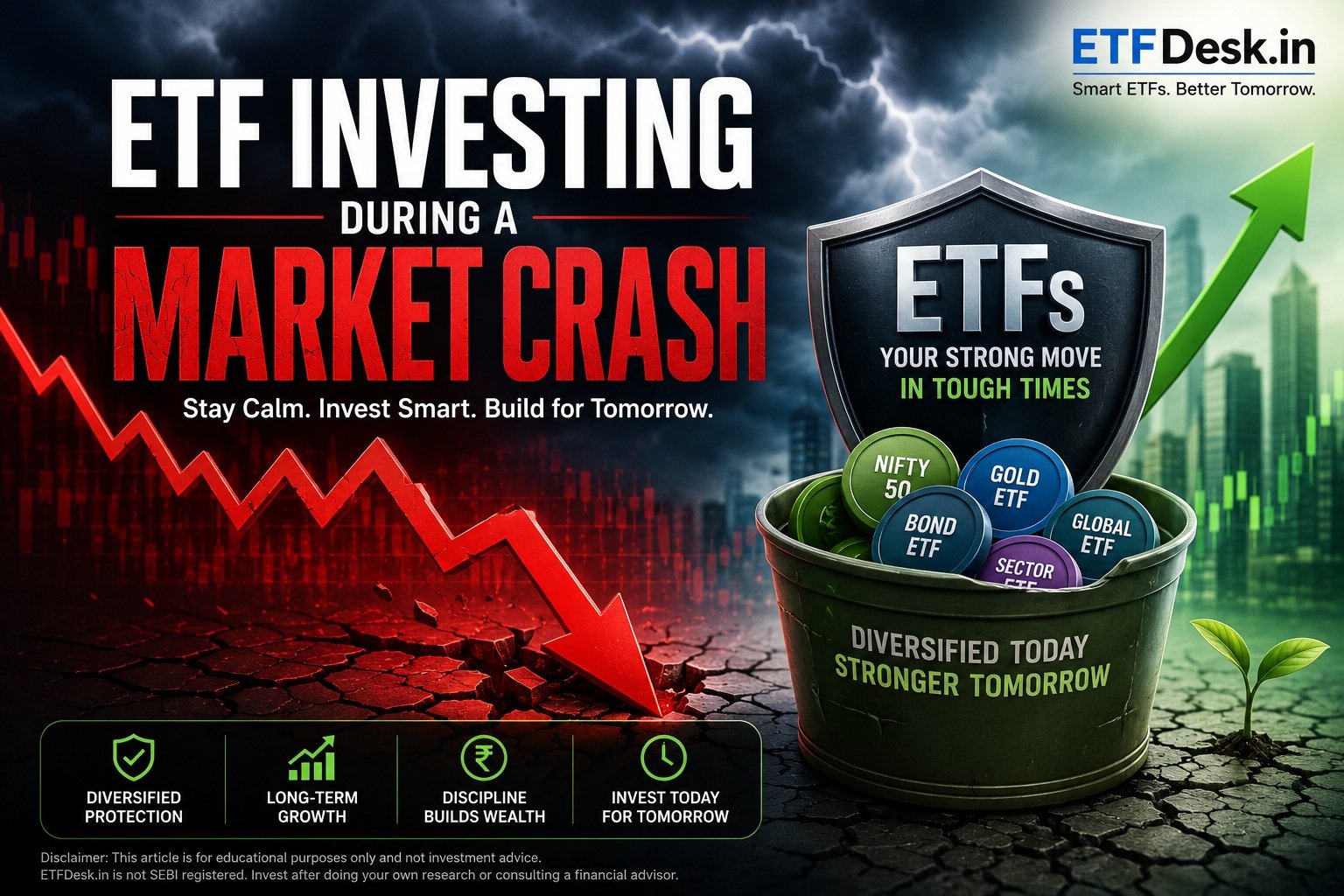
Share Market are always goes with ups and downs. If they get some bad news, War etc then Market are goes in to bear market. Sharp declines in stock prices often create fear, uncertainty, and panic among investors. However, If we look at the past history then This Market crash time are always good for wealth creation. For long-term investors, they can also present opportunities to build wealth through disciplined investing.
ETF Investing are popular in this period because they offer diversification, transparency, and relatively low costs. During a market crash, understanding how to approach ETF investing can help you make informed decisions instead of reacting emotionally.
Disclaimer: This article is for educational purposes only and should not be considered investment advice. ETFDesk.in is not SEBI registered. Always conduct your own research or consult a qualified financial advisor before making investment decisions.
Why ETFs Can Be Useful During a Market Crash
During the Market Crash ETF which are one of the top investing thing for the investor as they provide the diversification and not depend on single stocks and this is their one of the best ETF Advantage for newbie.
Benefits include:
- Diversification across multiple stocks
- Easy buying and selling through stock exchanges
- Transparent holdings
- Lower expense ratios compared to many actively managed funds
- Suitable for long-term investment strategies
Should You Stop Investing During a Market Crash?
Many investors stop investing during the markets fall because they fear further losses but If your horizon for long term the don’t fear. Keep accumulating good ETF in this time. You can also increase the step up Investing strategy in this occasion too as in Market crashes you can get ETF in lower price so gets more units.
However, predict the exact market bottom is extremely difficult and in this issue we recoemmend to invest in proratio.
Smart ETF Strategies During a Market Crash
1. Stay Calm and Avoid Panic Selling
One of the biggest mistakes many investors make is selling investments solely because prices have fallen in market crash. Selling during periods of fear may lock in losses that could have recovered over time.
Instead:
- Review your investment goals.
- Assess your risk tolerance.
- Avoid making decisions based only on headlines.
2. Continue Investing Regularly
Investing consistently—whether monthly or at regular interval—can help maintain discipline during volatile markets. You can easily check out ETF Average via going to this calculator this will help you to get your ETF average price.
3. Diversify Your ETF Portfolio
Diversification becomes even more important during market downturns.
A diversified portfolio may include:
| ETF Type | Purpose |
| Broad Market ETF | Core equity exposure |
| Large-Cap ETF | Stability |
| Mid-Cap ETF | Growth potential |
| Gold ETF | Diversification |
| International ETF | Geographic diversification |
Diversification does not eliminate risk but can help reduce concentration in any one segment.
4. Focus on Quality ETFs
During uncertain periods, investors often prioritize ETFs that:
- Track well-known indices likes Nifty 50 Index ETF, Next50 ETFs etc
- Choose ETF which are good liquidity
- Offer broad diversification
- Have reasonable expense ratios
Choose ETFs that align with your investment objectives rather than reacting to short-term market movements. By the Way you can check out our Filter Top 10 ETFs List here.
5. Review Your Asset Allocation
A market crash may change your portfolio allocation.
Example:
Before the crash:
- Equity ETFs – 70%
- Gold ETFs – 10%
- Debt investments – 20%
After the crash:
- Equity ETFs – 60%
- Gold – 15%
- Debt – 25%
6. Maintain an Emergency Fund
Investments should ideally be made with money that is not required for short-term expenses.
Maintaining an emergency fund can reduce the likelihood of selling investments during unfavorable market conditions.
7. Think Long Term
Market crashes can be temporary, while financial goals such as retirement, education, or wealth creation often span decades.
Keeping a long-term perspective may help investors avoid emotional decisions during short-term volatility.
Common Mistakes to Avoid During a Market Crash
Panic Selling
Selling solely because prices are falling can prevent participation in future recoveries.
Trying to Time the Market
Predicting the exact bottom is extremely difficult for major investors.
Instead of waiting for the “perfect” moment, many investors prefer a disciplined investment approach.
Investing Without Diversification
Concentrating all investments in a single ETF or sector increases portfolio risk. Don’t Miss : ETF Portfolio Allocation Calculator Which will help in portfolio allocation.
Following Market Rumors
Investment decisions should be based on research, financial goals, and risk tolerance—not social media or market speculation.
Ignoring Your Financial Plan
A well-defined investment strategy should guide decisions during both rising and falling markets.
Is It Better to Invest More During a Market Crash?
Every investor’s financial situation is different.
If additional investments fit within your financial plan and risk tolerance, some investors choose to continue or increase investments during downturns.
Key Takeaways
- Market crashes are a normal part of investing.
- Stay calm and avoid panic selling.
- Continue investing according to your long-term plan.
- Diversify across different ETF categories.
- Maintain an emergency fund.
- Review your portfolio periodically.
- Focus on long-term wealth creation rather than short-term market movements.
Frequently Asked Questions (FAQs)
Are ETFs safe during a market crash?
ETFs are subject to market risk, and their value can decline during a market crash. Diversified ETFs may reduce company-specific risk but cannot eliminate overall market risk.
Should I sell my ETFs during a market crash?
Whether to sell depends on your financial goals, investment horizon, and risk tolerance. Many long-term investors avoid making decisions based solely on short-term market movements.
Is a market crash a good time to start investing?
Some investors view market declines as opportunities, but investment decisions should always align with personal financial goals and risk tolerance.
Can beginners invest in ETFs during a market crash?
Yes. Beginners can invest in ETFs if they understand the risks, maintain diversification, and follow a disciplined long-term investment approach.
How often should I review my ETF portfolio?
Many long-term investors review their portfolio every 6 to 12 months or when there is a significant change in their financial goals or asset allocation.