Advantages and Disadvantages of ETFs (Exchange-Traded Funds)
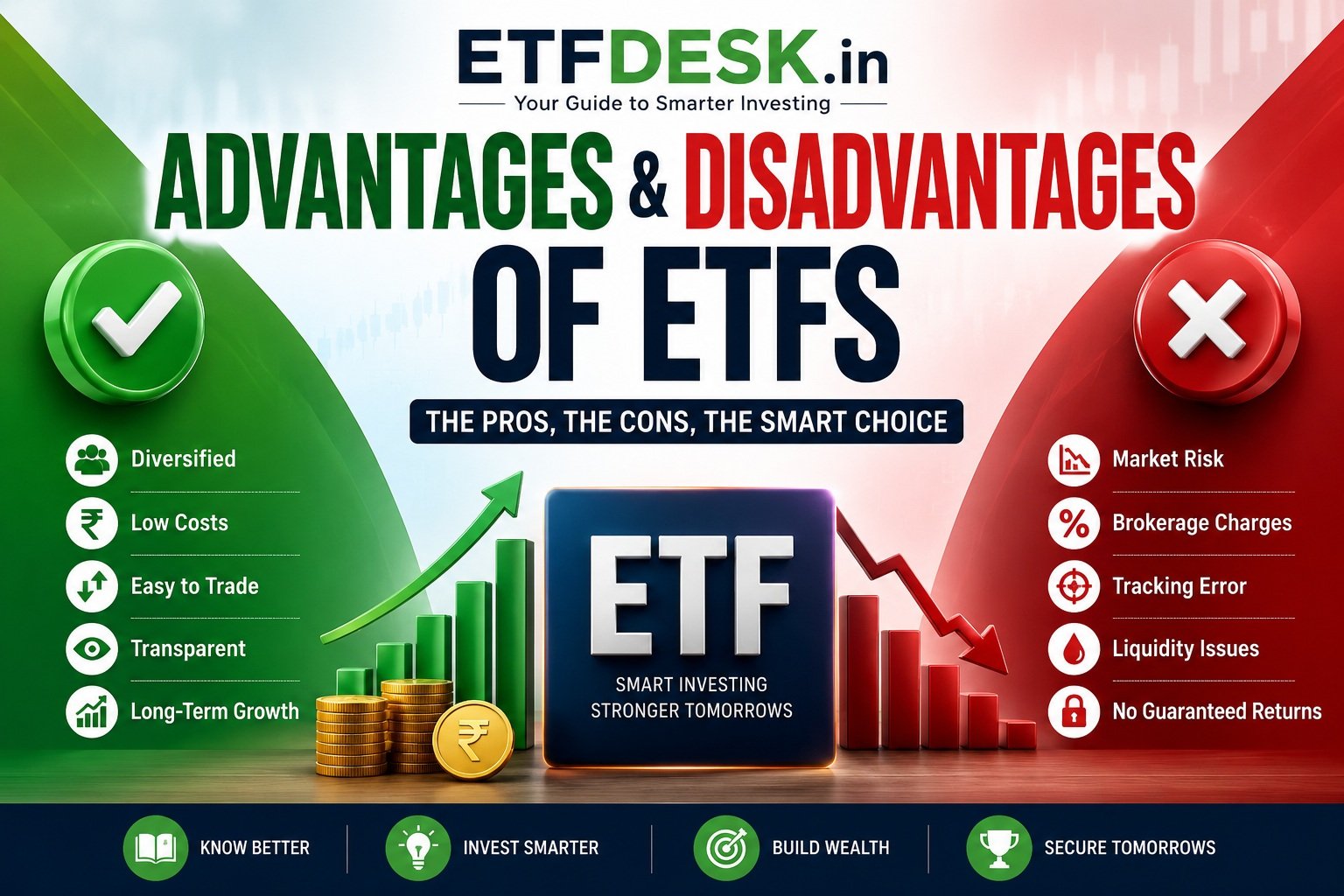
Exchange-Traded Funds (ETFs) have become one of the most popular investment options among Gen-Z investor and beginners because They offer an easy way to invest in a diversified portfolio by picking one basket of stocks without having to select individual stocks.
However, like every investment, ETFs come with both benefits and disadvantage too. Understanding these can help you decide whether ETFs fit your investment goals.
In this guide, we’ll fully explore the major advantages and disadvantages of investing in ETFs with easy to read languages.
What Are ETFs?
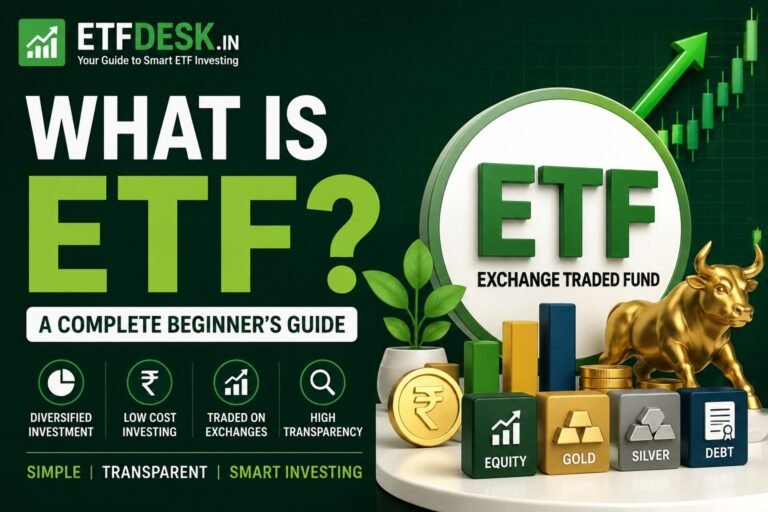
An Exchange-Traded Fund (ETF) is an one type of investment fund that holds a basket of securities such as stocks, bonds, gold, or other assets that’s why We Recommended beginners should starts their Investment journey with ETF.
Instead of buying dozens of stocks individually, investors can purchase a single ETF that provides exposure to an entire market index or particular sector.
Advantages of ETFs
1. Instant Diversification
One of the biggest advantages of Investing money via ETFs is diversification.
When you invest in a single ETF, your money gets spread across many companies rather than picking one stock.
For example:
- Nifty 50 ETF invests in India’s top 50 companies.
- Nifty Next 50 ETF covers top 50 leading companies just after the nifty 50.
- Gold ETFs track gold prices.
This reduces the impact of poor performance from any single company in long term.
Benefit: Lower investment risk compared to buying a single stock.
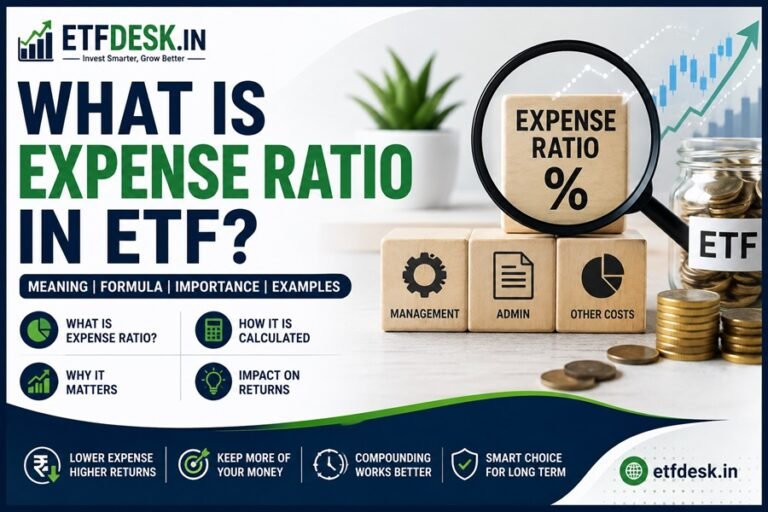
2. Lower Expense Ratios
Most ETFs have lower management fees than actively managed mutual funds or stocks.
Since many ETFs simply track an index, they require less active management.
Example:
- ETF Expense Ratio: 0.04%–0.50%
- Active Mutual Fund: 1%–2%
Over many years, these savings can significantly increase your investment returns.
3. Easy to Buy and Sell
Unlike mutual funds as they provide nav of that particular fund once after the market close, ETFs trade throughout market hours.
You can:
- Buy anytime during market hours
- Sell instantly
- Place limit orders
- Place stop-loss orders
This gives investors greater flexibility.
4. High Transparency
Most ETFs disclose their holdings daily.
You always know:
- Which company’s Stock the ETF owns
- Portfolio weightage with percentage
- Sector allocation
This transparency helps investors make informed decisions.
5. Suitable for Beginners
ETFs are simple investments strategy for the beginner and who came just few time ago in the share market.
Instead of researching and checking fundamental of dozens of companies stock, beginners can invest in one ETF that tracks the overall market.
Examples include:
- Nifty 50 ETFs
- Sensex ETFs
- Gold ETFs
- Nifty midcap ETFS
- Nifty Small Cap ETFs
Check out Top 10 ETF List to stars your investment journey
6. Lower Investment Risk
Because ETFs invest in multiple securities, they generally carry less company-specific risk.
If one company performs bad in particular time period, other companies of the ETF may offset those losses.
This makes ETFs relatively safer than investing in a single stock.
7. Wide Variety of Investment Options
There are ETFs for almost every investment theme.
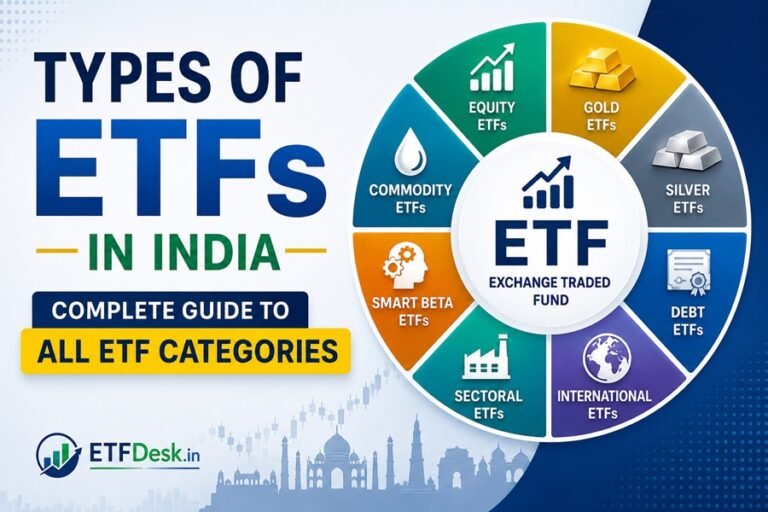
Popular ETF categories include:
- Index ETFs
- Gold ETFs
- Silver ETFs
- Banking ETFs
- IT ETFs
- Pharma ETFs
- International ETFs
- Bond ETFs
- Sector ETFs
Investors can easily build a diversified portfolio.
8. Tax Efficiency
Since ETF portfolios usually have lower turnover than actively managed funds, they can be more tax-efficient in some markets.
However, taxation depends on your country’s tax laws, so always check the latest regulations before investing.
9. Suitable for Long-Term Wealth Creation
If we Look at the Past and historical peformance of India’s Index ETFs then they historically performed well over long investment periods because they follow the overall market.
Long-term investors often use ETFs for their future goals like:
- Retirement planning
- Children’s education
- Wealth creation
- Financial independence
10. No Fund Manager Dependency
Actively managed funds rely heavily on the fund manager’s decisions.
Most ETFs simply track an index. so ETF are always a prime choice for the investors.
Disadvantages of ETFs
Apart of the Many benefits of ETFs, investors should also understand their limitations and risk on investing.
1. Market Risk
ETFs follow the market.
If the stock market falls sharply, the ETF’s value will also decline.
2. Brokerage Charges
Every ETF purchase or sale requires a brokerage account.
Investors may incur:
- Brokerage fees
- Exchange transaction charges
- Taxes
- Other trading costs
Frequent trading can reduce overall returns.
3. Tracking Error
An ETF may not perfectly match the performance of its benchmark index as sometime they are facing Tracking Error.
Reasons include:
- Expense ratio
- Cash holdings
- Fund management costs
- Portfolio rebalancing
The difference between ETF performance and index performance is called tracking error.
4. Liquidity Issues
Not all ETFs trade with high volume so if you choosen the low liquidity ETF then you have finding the issue while selling that particular etf as no seller..
Low-liquidity ETFs may have:
- Wider bid-ask spreads
- Difficulty buying or selling large quantities
- Price deviations from NAV
Investors should check trading volume before investing.
5. Limited Outperformance
Since most ETFs aim to replicate an index, they generally do not outperform it.
If you are seeking returns significantly above the market, actively managed funds or carefully selected stocks may offer that potential, though usually with higher risk.
6. Requires a Demat and Trading Account
To invest in ETFs, you’ll typically need:
- A Demat account likes of Dhan, Angel, Groww, Zerodha, ICICI etc.
- A Trading account
- A stock broker
This setup may be less convenient for some first-time investors compared with investing directly in mutual funds.
7. Emotional Trading Risk
Because ETFs trade like stocks, investors may be tempted to buy and sell frequently based on short-term market movements.
By doing the Frequent trading they got and issue about:
- Increase transaction costs
- Reduce long-term returns
- Lead to poor investment decisions
Long-term investing usually produces better results than constant day by day trading.
8. Dividend Variations
Some ETFs distribute dividends while others reinvest them.
Investors seeking regular income should review an ETF’s dividend approach before investing.
Advantages vs Disadvantages of ETFs in One Table
| Advantages | Disadvantages |
| Instant diversification | Market risk |
| Lower expense ratios | Brokerage costs |
| Easy to trade | Tracking error |
| High transparency | Liquidity issues in some ETFs |
| Beginner friendly | Requires Demat account |
| Lower company-specific risk | Cannot consistently outperform the index |
| Wide investment choices | Emotional overtrading risk |
| Suitable for long-term investing | Dividend income may vary |
Who Should Invest in ETFs?
ETFs may be suitable for:
- Beginner investors likes Students, Gen-Z
- Long-term wealth builders
- Retirement investors
- Passive investors
- Investors looking for low-cost investing
- People Who seeking diversified investing with a single investment
They may be less suitable for investors who frequently trade or expect returns that consistently beat the overall market.
Tips Before Investing in ETFs
Before buying an ETF, consider these points:
- Choose ETFs with low expense ratios.
- Check the tracking error.
- Prefer ETFs with good liquidity and trading volume.
- Understand what the ETF invests in.
- Match the ETF with your investment goals and risk tolerance.
- Invest regularly and focus on the long term instead of reacting to short-term market movements.
Frequently Asked Questions (FAQs)
Are ETFs better than stocks?
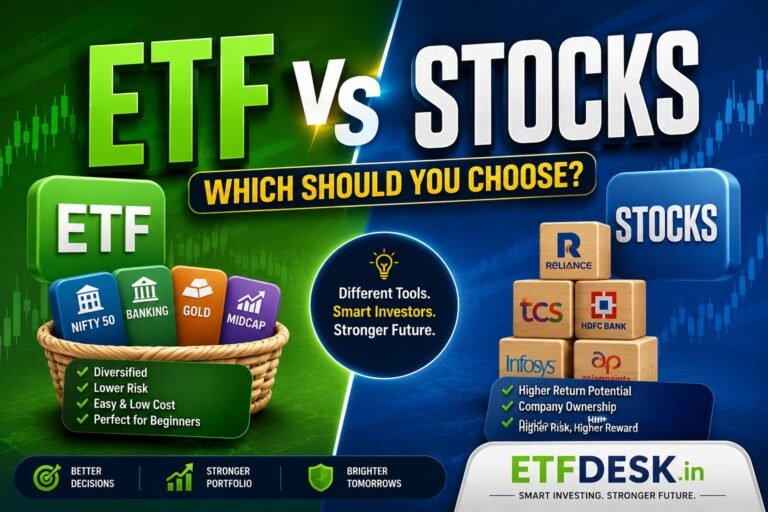
ETFs always provider investor to diversification and also come with lower company-specific risk, making them a good choice for the beginners. Individual stocks can provide higher returns but also involve higher risk.
Are ETFs safer than mutual funds?
Neither is universally safer. Index ETFs and index mutual funds that track the same benchmark have similar market risk. ETFs may offer lower costs and intraday trading, while mutual funds can be simpler for systematic investing.
Can ETFs lose money?
Yes. ETF prices fluctuate with the value of their underlying assets, so investors can lose money if markets decline.
Do ETFs pay dividends?
Some ETFs distribute dividends received from their holdings, while others automatically reinvest those dividends. It depends on the ETF’s structure and policy.
Should beginners invest in ETFs?
Yes. Broad-market ETFs are often considered one of the simplest ways for beginners to start investing because they provide diversification at a relatively low cost.