ETF vs Mutual Fund: Which Is the Better Investment Choice in 2026?
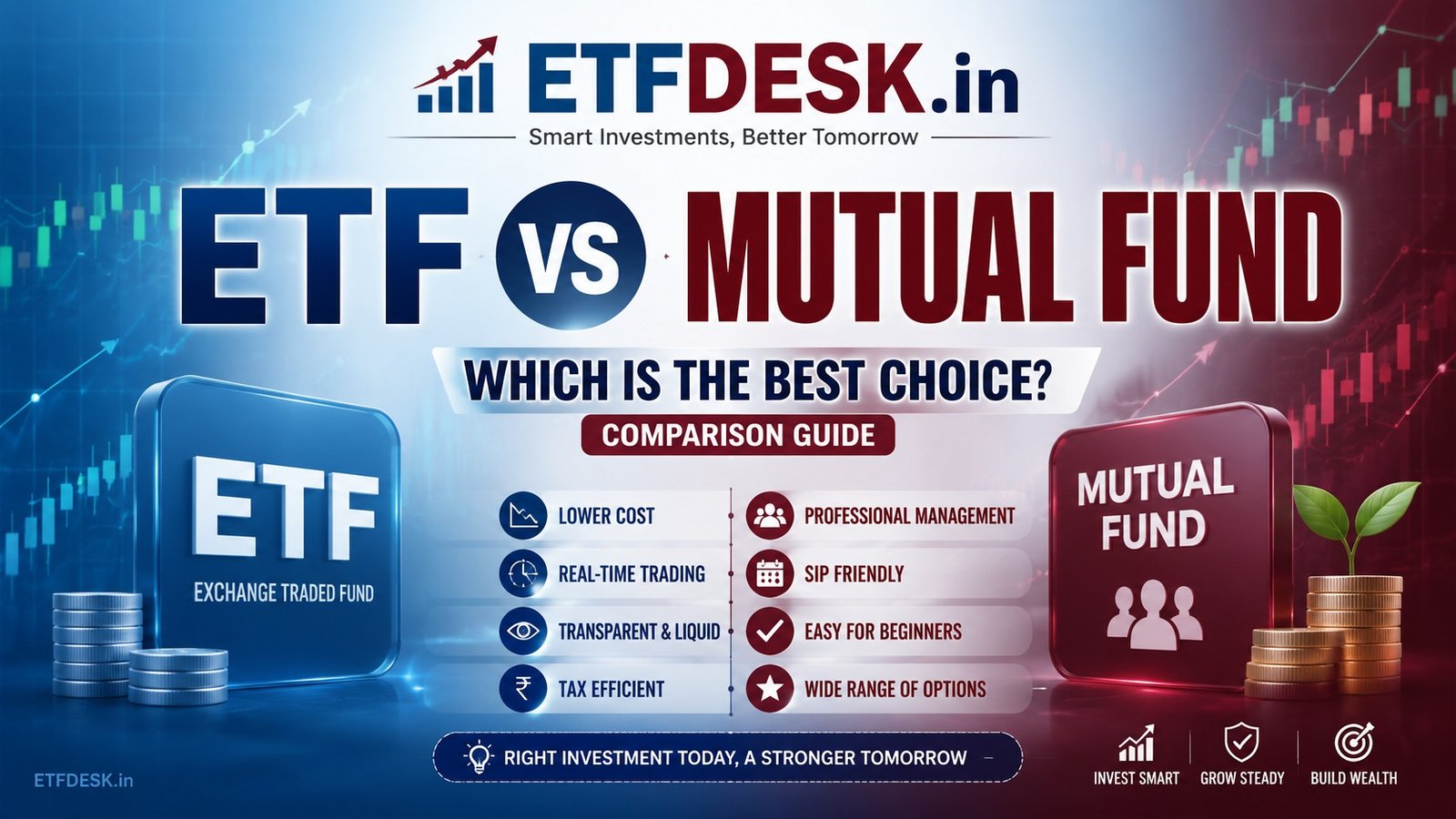
If you’re planning to start investing in Indian Share Market then one of the biggest questions in your mind always came about ETF vs Mutual Fund – which is the better choice?
Both Exchange Traded Funds (ETFs) and Mutual Funds help investors diversify their portfolios without buying individual stocks. However, they differ in costs, trading methods, flexibility, taxation, and long-term performance. If you are beginner then you must check out Top 10 ETFs List for Beginners.
In this guide, we’ll compare ETFs and Mutual Funds side by side to help you make the right investment decision.
What is an ETF?
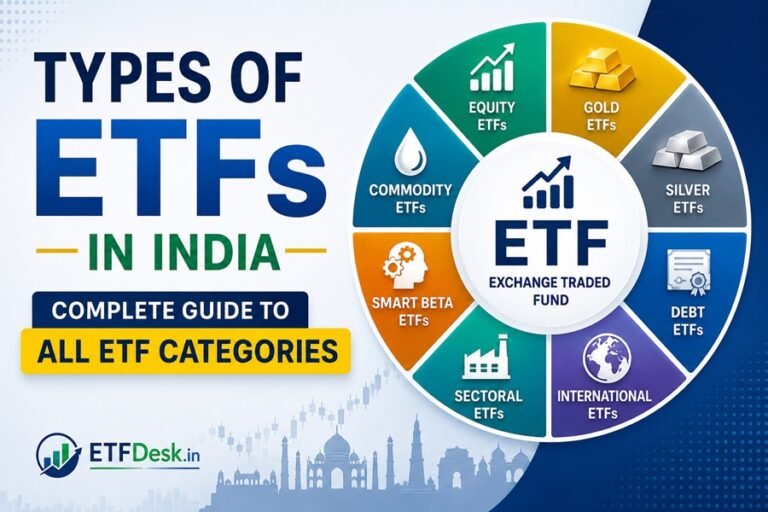
An Exchange Traded Fund (ETF) is an investment fund that tracks an index, sector, commodity, or theme. ETFs are traded on the stock exchange just like shares.
For example:
- Nifty 50 ETF
- Bank ETF
- Gold ETF
- CPSE ETF
- Bharat 22 ETF
You can buy or sell ETFs anytime during market hours. You can buy in lumsum amount of ETF or go with ETP SIP both options you will get from the most of the brokers like dhan, angel one etc.
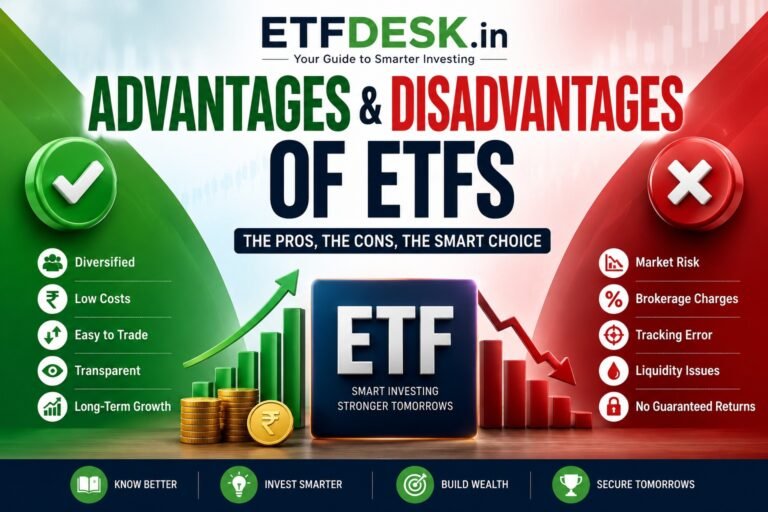
Advantages of ETFs
- Lower expense ratio
- Real-time buying and selling
- Transparent holdings
- Tax efficient
- Suitable for long-term investing
- Ideal for passive investors
Disadvantages of ETFs
- Requires a Demat and trading account
- Brokerage charges may apply
- Liquidity varies between ETFs
- Price may trade slightly above or below NAV
What is a Mutual Fund?
A Mutual Fund pools money from many investors and is managed by professional fund managers who decide where to invest. Currently so many fund house provide such service to their customer. Investors buy units directly from the fund house, and transactions happen at the day’s Net Asset Value (NAV).
Advantages of Mutual Funds
- Professional fund management
- Easy SIP investments
- No need for a Demat account
- Wide range of investment options
- Suitable for beginners & Gen-Z
Disadvantages of Mutual Funds
- Higher expense ratios in comparison to ETFs
- No intraday trading
- Less transparent than ETFs
- Fund manager performance affects returns
ETF vs Mutual Fund Comparison
| Feature | ETF | Mutual Fund |
| Trading | Stock Exchange | Fund House |
| Buy/Sell | Anytime during market hours | Once per day at NAV |
| Expense Ratio | Usually Lower | Usually Higher |
| Fund Management | Mostly Passive | Active or Passive |
| Demat Account | Required | Not Required |
| SIP Available | Limited (through broker) | Easily Available |
| Liquidity | High (popular ETFs) | Redeemed through AMC |
| Transparency | Daily | Monthly/Periodic |
| Tax Efficiency | Better | Slightly Lower |
| Best For | Cost-conscious investors | Beginners & SIP investors |
If we check out the above table then definately seen that ETFs are better in comparison to Mutual Fund. If you are Gen-z or Beginners you should starts your investing journey with ETF in India.
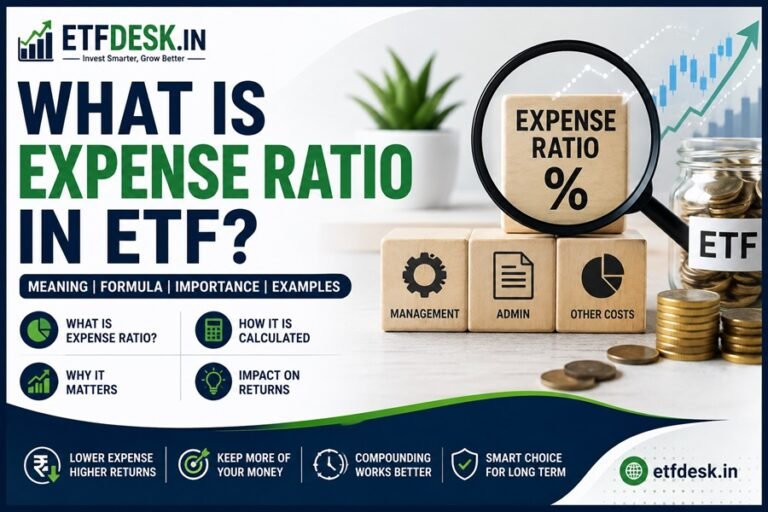
Expense Ratio Comparison
Expense ratio has a significant impact on long-term returns.
ETF Calculators
Free tools to plan your ETF investments.
Example
Investment Amount: ₹10,00,000
Annual Return Before Expenses: 12%
ETF Expense Ratio: 0.20%
Mutual Fund Expense Ratio: 1.50%
Over 20 years, even a 1% difference in annual expenses can result in lakhs of rupees in additional wealth for ETF investors due to compounding. You can check out our Tool of ETF Brokerage calculator to check how much expense you are facing to buy particular ETF.
Returns: ETF vs Mutual Fund
There is no universal winner.
ETFs generally perform better when:
- Markets are trending upward
- You prefer passive investing
- You want to minimize costs
- You hold investments for many years
Mutual Funds may outperform when:
- A skilled fund manager consistently beats the benchmark
- Investing in specialized sectors
- Small-cap or thematic opportunities
However, many actively managed mutual funds struggle to outperform their benchmark over long periods after accounting for fees.
Taxation
Both ETFs and Equity Mutual Funds receive similar tax in India when they qualify as equity investments.
Capital gains tax depends mainly on your holding period and prevailing tax rules rather than whether the investment is an ETF or mutual fund.
Liquidity Comparison
ETF
- Buy instantly
- Sell instantly
- Live market pricing
Mutual Fund
- Order today
- Transaction executed at end-of-day NAV
- Money credited after redemption processing
If flexibility is important, ETFs have the greater advantage.
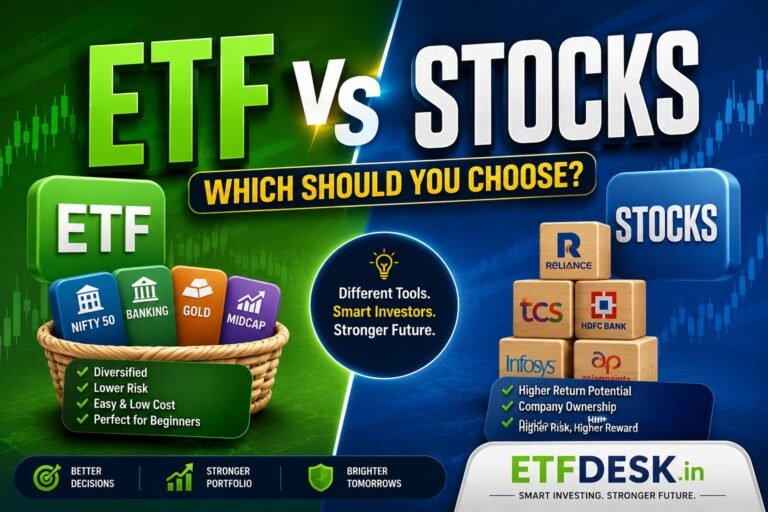
Don’t Miss : ETF vs Stock Which are better ?
Who Should Invest in ETFs?
Choose ETFs if you:
- Want lower investment costs
- Prefer long-term investing
- Like index investing
- Already have a Demat account
- Want transparent holdings
- Prefer passive wealth creation
Who Should Invest in Mutual Funds?
Choose Mutual Funds if you:
- Are a beginner
- Want automatic monthly SIPs
- Don’t have a Demat account
- Prefer professional management
- Want someone else making investment decisions
ETF vs Mutual Fund: Pros and Cons
ETF Pros
- Lower fees
- Real-time trading
- Easy SIP (Some brokers likes of Dhan, Angel one provide this feature to investor)
- Tax efficient
- Transparent
- Ideal for long-term investors
ETF Cons
- Demat account required
- Brokerage charges
- Liquidity depends on trading volume
Mutual Fund Pros
- Managed by experts
- Easy SIP
- Beginner friendly
- No Demat account needed
Mutual Fund Cons
- Higher fees
- No intraday trading
- Performance depends on fund manager
Which Investment Is Better for Beginners?
For most beginners:
- Choose Mutual Funds if you want a simple, automated SIP experience and prefer professional management.
- Choose ETFs if you’re comfortable using a Demat account and want lower costs with passive investing.
Which Is Better for Long-Term Wealth Creation?
For investors with a 10–20 year investment horizon, low-cost index ETFs can be an excellent choice because lower expenses leave more of your returns invested over time.
Frequently Asked Questions (FAQs)
Is an ETF safer than a Mutual Fund?
Not a single investment are without risk in market as Both carry market risk. Safety depends on the underlying investments rather than the investment vehicle itself.
Which has lower fees?
ETFs generally have lower expense ratios than actively managed mutual funds.
Can I invest monthly in ETFs?
Yes. Many brokers allow you to purchase ETF units regularly, although the experience differs from a traditional SIP.
Which gives better returns?
Neither consistently outperforms the other. Returns depend on the investment strategy, market conditions, and costs.
Do I need a Demat account for ETFs?
Yes. ETFs trade on stock exchanges, so you need a Demat and trading account.